
To ensure an air compressor remains reliable, runs efficiently and is longer-lasting, proper care and maintenance are essential.
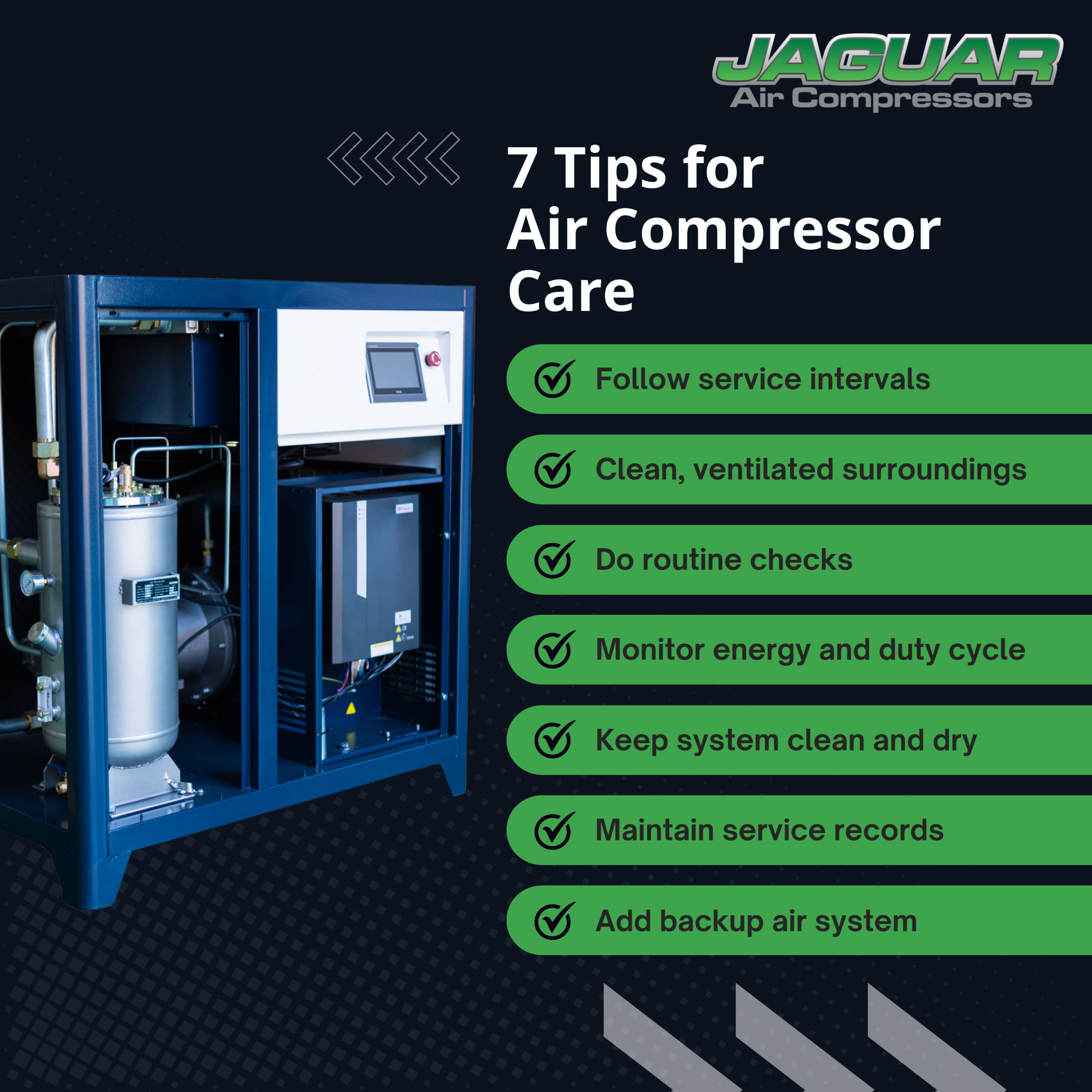
Below are several key guidelines that every facility should follow to protect their investment and minimise costly downtimes:
Follow Correct Service Intervals Using OEM Parts and Lubricants
-
- Maintain a Clean and Well-Ventilated Operating Environment
- Perform Daily, Weekly and Monthly Checks
- Monitor Energy Consumption and Duty Cycle
- Keep the Air System Clean and Moisture-Free
- Maintain Clear Documentation and Service History
- Install Redundancy in Facility (Backup Air)
1. Follow Correct Service Intervals Using OEM Parts and Lubricants
Servicing an air compressor on time is the single most important factor in extending its lifespan.
6. Maintain Clear Documentation and Service History
-
- Keep a logbook of all air compressor service dates, parts replaced, oil usage and faults.
- Detailed documentation helps with warranty support, diagnosis and preventative maintenance.
7. Install Redundancy in Facility (Backup Air)
Having redundancy in a compressed air system is one of the smartest long-term investments.
-
- A backup air compressor ensures uninterrupted production.
- Alternating compressors keeps running hours balanced.
- Lower running hours improve reliability and lifespan.
- During peak demand, a secondary compressor prevents overloading and high duty cycles.
- Redundancy eliminates costly downtimes.
A well-designed compressed air system with backup air ensures stability, safety and improved operational efficiency.
Summary
By sticking to proper service intervals, ensuring a clean and ventilated environment, performing regular checks, monitoring energy usage, keeping clean dry air, and implementing system redundancy, facilities can extend the lifespan of air compressors while reducing energy costs and downtimes.
Need help with your air compressor system? Contact Jaguar Air Compressors on 011-704-2630 today!
6. Maintain Clear Documentation and Service History
-
- Keep a logbook of all air compressor service dates, parts replaced, oil usage and faults.
- Detailed documentation helps with warranty support, diagnosis and preventative maintenance.
7. Install Redundancy in Facility (Backup Air)
Having redundancy in a compressed air system is one of the smartest long-term investments.
-
- A backup air compressor ensures uninterrupted production.
- Alternating compressors keeps running hours balanced.
- Lower running hours improve reliability and lifespan.
- During peak demand, a secondary compressor prevents overloading and high duty cycles.
- Redundancy eliminates costly downtimes.
A well-designed compressed air system with backup air ensures stability, safety and improved operational efficiency.
Summary
By sticking to proper service intervals, ensuring a clean and ventilated environment, performing regular checks, monitoring energy usage, keeping clean dry air, and implementing system redundancy, facilities can extend the lifespan of air compressors while reducing energy costs and downtimes.
Need help with your air compressor system? Contact Jaguar Air Compressors on 011-704-2630 today!
[/vc_column_text][/vc_column][/vc_row]
5. Keep the Air System Clean and Moisture-Free-
- Ensure the air dryer works properly to prevent water contamination.
- Replace air dryer filters on schedule.
- Water and oil contamination can damage tools, valves, cylinders and downline machinery.
6. Maintain Clear Documentation and Service History
-
- Keep a logbook of all air compressor service dates, parts replaced, oil usage and faults.
- Detailed documentation helps with warranty support, diagnosis and preventative maintenance.
7. Install Redundancy in Facility (Backup Air)
Having redundancy in a compressed air system is one of the smartest long-term investments.
-
- A backup air compressor ensures uninterrupted production.
- Alternating compressors keeps running hours balanced.
- Lower running hours improve reliability and lifespan.
- During peak demand, a secondary compressor prevents overloading and high duty cycles.
- Redundancy eliminates costly downtimes.
A well-designed compressed air system with backup air ensures stability, safety and improved operational efficiency.
Summary
By sticking to proper service intervals, ensuring a clean and ventilated environment, performing regular checks, monitoring energy usage, keeping clean dry air, and implementing system redundancy, facilities can extend the lifespan of air compressors while reducing energy costs and downtimes.
Need help with your air compressor system? Contact Jaguar Air Compressors on 011-704-2630 today!
[/vc_column_text][/vc_column][/vc_row]
5. Keep the Air System Clean and Moisture-Free
-
- Ensure the air dryer works properly to prevent water contamination.
- Replace air dryer filters on schedule.
- Water and oil contamination can damage tools, valves, cylinders and downline machinery.
6. Maintain Clear Documentation and Service History
-
- Keep a logbook of all air compressor service dates, parts replaced, oil usage and faults.
- Detailed documentation helps with warranty support, diagnosis and preventative maintenance.
7. Install Redundancy in Facility (Backup Air)
Having redundancy in a compressed air system is one of the smartest long-term investments.
-
- A backup air compressor ensures uninterrupted production.
- Alternating compressors keeps running hours balanced.
- Lower running hours improve reliability and lifespan.
- During peak demand, a secondary compressor prevents overloading and high duty cycles.
- Redundancy eliminates costly downtimes.
A well-designed compressed air system with backup air ensures stability, safety and improved operational efficiency.
Summary
By sticking to proper service intervals, ensuring a clean and ventilated environment, performing regular checks, monitoring energy usage, keeping clean dry air, and implementing system redundancy, facilities can extend the lifespan of air compressors while reducing energy costs and downtimes.
Need help with your air compressor system? Contact Jaguar Air Compressors on 011-704-2630 today!
[/vc_column_text][/vc_column][/vc_row]
4. Monitor Energy Consumption and Duty Cycle
-
- An air compressor at 100% duty cycle risks premature failure.
- Ensure the air compressor is correctly sized for the facility.
- For varying air demand, consider VSD (Variable Speed Drive) air compressors to reduce energy costs and equipment wear.
Monitoring air compressor performance helps identify air leaks and sizing issues.
5. Keep the Air System Clean and Moisture-Free
-
- Ensure the air dryer works properly to prevent water contamination.
- Replace air dryer filters on schedule.
- Water and oil contamination can damage tools, valves, cylinders and downline machinery.
6. Maintain Clear Documentation and Service History
-
- Keep a logbook of all air compressor service dates, parts replaced, oil usage and faults.
- Detailed documentation helps with warranty support, diagnosis and preventative maintenance.
7. Install Redundancy in Facility (Backup Air)
Having redundancy in a compressed air system is one of the smartest long-term investments.
-
- A backup air compressor ensures uninterrupted production.
- Alternating compressors keeps running hours balanced.
- Lower running hours improve reliability and lifespan.
- During peak demand, a secondary compressor prevents overloading and high duty cycles.
- Redundancy eliminates costly downtimes.
A well-designed compressed air system with backup air ensures stability, safety and improved operational efficiency.
Summary
By sticking to proper service intervals, ensuring a clean and ventilated environment, performing regular checks, monitoring energy usage, keeping clean dry air, and implementing system redundancy, facilities can extend the lifespan of air compressors while reducing energy costs and downtimes.
Need help with your air compressor system? Contact Jaguar Air Compressors on 011-704-2630 today!
[/vc_column_text][/vc_column][/vc_row]
Monthly Checks:-
- Inspect belts, couplings and tensioners.
- Check ventilation and clean surrounding areas.
- Verify pressure settings.
4. Monitor Energy Consumption and Duty Cycle
-
- An air compressor at 100% duty cycle risks premature failure.
- Ensure the air compressor is correctly sized for the facility.
- For varying air demand, consider VSD (Variable Speed Drive) air compressors to reduce energy costs and equipment wear.
Monitoring air compressor performance helps identify air leaks and sizing issues.
5. Keep the Air System Clean and Moisture-Free
-
- Ensure the air dryer works properly to prevent water contamination.
- Replace air dryer filters on schedule.
- Water and oil contamination can damage tools, valves, cylinders and downline machinery.
6. Maintain Clear Documentation and Service History
-
- Keep a logbook of all air compressor service dates, parts replaced, oil usage and faults.
- Detailed documentation helps with warranty support, diagnosis and preventative maintenance.
7. Install Redundancy in Facility (Backup Air)
Having redundancy in a compressed air system is one of the smartest long-term investments.
-
- A backup air compressor ensures uninterrupted production.
- Alternating compressors keeps running hours balanced.
- Lower running hours improve reliability and lifespan.
- During peak demand, a secondary compressor prevents overloading and high duty cycles.
- Redundancy eliminates costly downtimes.
A well-designed compressed air system with backup air ensures stability, safety and improved operational efficiency.
Summary
By sticking to proper service intervals, ensuring a clean and ventilated environment, performing regular checks, monitoring energy usage, keeping clean dry air, and implementing system redundancy, facilities can extend the lifespan of air compressors while reducing energy costs and downtimes.
Need help with your air compressor system? Contact Jaguar Air Compressors on 011-704-2630 today!
[/vc_column_text][/vc_column][/vc_row]
Monthly Checks:
-
- Inspect belts, couplings and tensioners.
- Check ventilation and clean surrounding areas.
- Verify pressure settings.
4. Monitor Energy Consumption and Duty Cycle
-
- An air compressor at 100% duty cycle risks premature failure.
- Ensure the air compressor is correctly sized for the facility.
- For varying air demand, consider VSD (Variable Speed Drive) air compressors to reduce energy costs and equipment wear.
Monitoring air compressor performance helps identify air leaks and sizing issues.
5. Keep the Air System Clean and Moisture-Free
-
- Ensure the air dryer works properly to prevent water contamination.
- Replace air dryer filters on schedule.
- Water and oil contamination can damage tools, valves, cylinders and downline machinery.
6. Maintain Clear Documentation and Service History
-
- Keep a logbook of all air compressor service dates, parts replaced, oil usage and faults.
- Detailed documentation helps with warranty support, diagnosis and preventative maintenance.
7. Install Redundancy in Facility (Backup Air)
Having redundancy in a compressed air system is one of the smartest long-term investments.
-
- A backup air compressor ensures uninterrupted production.
- Alternating compressors keeps running hours balanced.
- Lower running hours improve reliability and lifespan.
- During peak demand, a secondary compressor prevents overloading and high duty cycles.
- Redundancy eliminates costly downtimes.
A well-designed compressed air system with backup air ensures stability, safety and improved operational efficiency.
Summary
By sticking to proper service intervals, ensuring a clean and ventilated environment, performing regular checks, monitoring energy usage, keeping clean dry air, and implementing system redundancy, facilities can extend the lifespan of air compressors while reducing energy costs and downtimes.
Need help with your air compressor system? Contact Jaguar Air Compressors on 011-704-2630 today!
[/vc_column_text][/vc_column][/vc_row]
Weekly Checks:-
- Inspect and clean panel filters.
- Check the inlet air filter and replace if dirty.
- Review the controller for alarms or overloads.
- Drain condensate from the air receiver or ensure the auto-drain works.
Monthly Checks:
-
- Inspect belts, couplings and tensioners.
- Check ventilation and clean surrounding areas.
- Verify pressure settings.
4. Monitor Energy Consumption and Duty Cycle
-
- An air compressor at 100% duty cycle risks premature failure.
- Ensure the air compressor is correctly sized for the facility.
- For varying air demand, consider VSD (Variable Speed Drive) air compressors to reduce energy costs and equipment wear.
Monitoring air compressor performance helps identify air leaks and sizing issues.
5. Keep the Air System Clean and Moisture-Free
-
- Ensure the air dryer works properly to prevent water contamination.
- Replace air dryer filters on schedule.
- Water and oil contamination can damage tools, valves, cylinders and downline machinery.
6. Maintain Clear Documentation and Service History
-
- Keep a logbook of all air compressor service dates, parts replaced, oil usage and faults.
- Detailed documentation helps with warranty support, diagnosis and preventative maintenance.
7. Install Redundancy in Facility (Backup Air)
Having redundancy in a compressed air system is one of the smartest long-term investments.
-
- A backup air compressor ensures uninterrupted production.
- Alternating compressors keeps running hours balanced.
- Lower running hours improve reliability and lifespan.
- During peak demand, a secondary compressor prevents overloading and high duty cycles.
- Redundancy eliminates costly downtimes.
A well-designed compressed air system with backup air ensures stability, safety and improved operational efficiency.
Summary
By sticking to proper service intervals, ensuring a clean and ventilated environment, performing regular checks, monitoring energy usage, keeping clean dry air, and implementing system redundancy, facilities can extend the lifespan of air compressors while reducing energy costs and downtimes.
Need help with your air compressor system? Contact Jaguar Air Compressors on 011-704-2630 today!
[/vc_column_text][/vc_column][/vc_row]
Weekly Checks:
-
- Inspect and clean panel filters.
- Check the inlet air filter and replace if dirty.
- Review the controller for alarms or overloads.
- Drain condensate from the air receiver or ensure the auto-drain works.
Monthly Checks:
-
- Inspect belts, couplings and tensioners.
- Check ventilation and clean surrounding areas.
- Verify pressure settings.
4. Monitor Energy Consumption and Duty Cycle
-
- An air compressor at 100% duty cycle risks premature failure.
- Ensure the air compressor is correctly sized for the facility.
- For varying air demand, consider VSD (Variable Speed Drive) air compressors to reduce energy costs and equipment wear.
Monitoring air compressor performance helps identify air leaks and sizing issues.
5. Keep the Air System Clean and Moisture-Free
-
- Ensure the air dryer works properly to prevent water contamination.
- Replace air dryer filters on schedule.
- Water and oil contamination can damage tools, valves, cylinders and downline machinery.
6. Maintain Clear Documentation and Service History
-
- Keep a logbook of all air compressor service dates, parts replaced, oil usage and faults.
- Detailed documentation helps with warranty support, diagnosis and preventative maintenance.
7. Install Redundancy in Facility (Backup Air)
Having redundancy in a compressed air system is one of the smartest long-term investments.
-
- A backup air compressor ensures uninterrupted production.
- Alternating compressors keeps running hours balanced.
- Lower running hours improve reliability and lifespan.
- During peak demand, a secondary compressor prevents overloading and high duty cycles.
- Redundancy eliminates costly downtimes.
A well-designed compressed air system with backup air ensures stability, safety and improved operational efficiency.
Summary
By sticking to proper service intervals, ensuring a clean and ventilated environment, performing regular checks, monitoring energy usage, keeping clean dry air, and implementing system redundancy, facilities can extend the lifespan of air compressors while reducing energy costs and downtimes.
Need help with your air compressor system? Contact Jaguar Air Compressors on 011-704-2630 today!
[/vc_column_text][/vc_column][/vc_row]
Daily Checks:-
- Check oil levels.
- Listen for unusual noises or vibrations while the air compressor is running.
- Check the running temperature and ensure it’s within normal range.
- Confirm no visible oil or air leaks around fittings, hoses or separator tank.
- Ensure the air compressor starts and stops correctly.
Weekly Checks:
-
- Inspect and clean panel filters.
- Check the inlet air filter and replace if dirty.
- Review the controller for alarms or overloads.
- Drain condensate from the air receiver or ensure the auto-drain works.
Monthly Checks:
-
- Inspect belts, couplings and tensioners.
- Check ventilation and clean surrounding areas.
- Verify pressure settings.
4. Monitor Energy Consumption and Duty Cycle
-
- An air compressor at 100% duty cycle risks premature failure.
- Ensure the air compressor is correctly sized for the facility.
- For varying air demand, consider VSD (Variable Speed Drive) air compressors to reduce energy costs and equipment wear.
Monitoring air compressor performance helps identify air leaks and sizing issues.
5. Keep the Air System Clean and Moisture-Free
-
- Ensure the air dryer works properly to prevent water contamination.
- Replace air dryer filters on schedule.
- Water and oil contamination can damage tools, valves, cylinders and downline machinery.
6. Maintain Clear Documentation and Service History
-
- Keep a logbook of all air compressor service dates, parts replaced, oil usage and faults.
- Detailed documentation helps with warranty support, diagnosis and preventative maintenance.
7. Install Redundancy in Facility (Backup Air)
Having redundancy in a compressed air system is one of the smartest long-term investments.
-
- A backup air compressor ensures uninterrupted production.
- Alternating compressors keeps running hours balanced.
- Lower running hours improve reliability and lifespan.
- During peak demand, a secondary compressor prevents overloading and high duty cycles.
- Redundancy eliminates costly downtimes.
A well-designed compressed air system with backup air ensures stability, safety and improved operational efficiency.
Summary
By sticking to proper service intervals, ensuring a clean and ventilated environment, performing regular checks, monitoring energy usage, keeping clean dry air, and implementing system redundancy, facilities can extend the lifespan of air compressors while reducing energy costs and downtimes.
Need help with your air compressor system? Contact Jaguar Air Compressors on 011-704-2630 today!
[/vc_column_text][/vc_column][/vc_row]
Daily Checks:
-
- Check oil levels.
- Listen for unusual noises or vibrations while the air compressor is running.
- Check the running temperature and ensure it’s within normal range.
- Confirm no visible oil or air leaks around fittings, hoses or separator tank.
- Ensure the air compressor starts and stops correctly.
Weekly Checks:
-
- Inspect and clean panel filters.
- Check the inlet air filter and replace if dirty.
- Review the controller for alarms or overloads.
- Drain condensate from the air receiver or ensure the auto-drain works.
Monthly Checks:
-
- Inspect belts, couplings and tensioners.
- Check ventilation and clean surrounding areas.
- Verify pressure settings.
4. Monitor Energy Consumption and Duty Cycle
-
- An air compressor at 100% duty cycle risks premature failure.
- Ensure the air compressor is correctly sized for the facility.
- For varying air demand, consider VSD (Variable Speed Drive) air compressors to reduce energy costs and equipment wear.
Monitoring air compressor performance helps identify air leaks and sizing issues.
5. Keep the Air System Clean and Moisture-Free
-
- Ensure the air dryer works properly to prevent water contamination.
- Replace air dryer filters on schedule.
- Water and oil contamination can damage tools, valves, cylinders and downline machinery.
6. Maintain Clear Documentation and Service History
-
- Keep a logbook of all air compressor service dates, parts replaced, oil usage and faults.
- Detailed documentation helps with warranty support, diagnosis and preventative maintenance.
7. Install Redundancy in Facility (Backup Air)
Having redundancy in a compressed air system is one of the smartest long-term investments.
-
- A backup air compressor ensures uninterrupted production.
- Alternating compressors keeps running hours balanced.
- Lower running hours improve reliability and lifespan.
- During peak demand, a secondary compressor prevents overloading and high duty cycles.
- Redundancy eliminates costly downtimes.
A well-designed compressed air system with backup air ensures stability, safety and improved operational efficiency.
Summary
By sticking to proper service intervals, ensuring a clean and ventilated environment, performing regular checks, monitoring energy usage, keeping clean dry air, and implementing system redundancy, facilities can extend the lifespan of air compressors while reducing energy costs and downtimes.
Need help with your air compressor system? Contact Jaguar Air Compressors on 011-704-2630 today!
[/vc_column_text][/vc_column][/vc_row]
The environment an air compressor operates in directly affects its performance and lifespan.-
- Ensure the air compressor room has enough airflow, with hot air extracted and cool air brought in.
- Avoid installing air compressors in dusty, damp or poorly ventilated areas.
- Keep at least 1 metre around the air compressor for air circulation and maintenance access.
- High environmental temperatures can reduce air compressor efficiency and increase oil consumption.
- Install cooling fans or ducting if temperatures exceed recommended operating limits.
A clean and controlled environment helps an air compressor run cooler, improves energy efficiency and prevents overheating issues.
3. Perform Daily, Weekly and Monthly Checks
Regular air compressor monitoring helps early detection of issues before they escalate into costly repairs.
Daily Checks:
-
- Check oil levels.
- Listen for unusual noises or vibrations while the air compressor is running.
- Check the running temperature and ensure it’s within normal range.
- Confirm no visible oil or air leaks around fittings, hoses or separator tank.
- Ensure the air compressor starts and stops correctly.
Weekly Checks:
-
- Inspect and clean panel filters.
- Check the inlet air filter and replace if dirty.
- Review the controller for alarms or overloads.
- Drain condensate from the air receiver or ensure the auto-drain works.
Monthly Checks:
-
- Inspect belts, couplings and tensioners.
- Check ventilation and clean surrounding areas.
- Verify pressure settings.
4. Monitor Energy Consumption and Duty Cycle
-
- An air compressor at 100% duty cycle risks premature failure.
- Ensure the air compressor is correctly sized for the facility.
- For varying air demand, consider VSD (Variable Speed Drive) air compressors to reduce energy costs and equipment wear.
Monitoring air compressor performance helps identify air leaks and sizing issues.
5. Keep the Air System Clean and Moisture-Free
-
- Ensure the air dryer works properly to prevent water contamination.
- Replace air dryer filters on schedule.
- Water and oil contamination can damage tools, valves, cylinders and downline machinery.
6. Maintain Clear Documentation and Service History
-
- Keep a logbook of all air compressor service dates, parts replaced, oil usage and faults.
- Detailed documentation helps with warranty support, diagnosis and preventative maintenance.
7. Install Redundancy in Facility (Backup Air)
Having redundancy in a compressed air system is one of the smartest long-term investments.
-
- A backup air compressor ensures uninterrupted production.
- Alternating compressors keeps running hours balanced.
- Lower running hours improve reliability and lifespan.
- During peak demand, a secondary compressor prevents overloading and high duty cycles.
- Redundancy eliminates costly downtimes.
A well-designed compressed air system with backup air ensures stability, safety and improved operational efficiency.
Summary
By sticking to proper service intervals, ensuring a clean and ventilated environment, performing regular checks, monitoring energy usage, keeping clean dry air, and implementing system redundancy, facilities can extend the lifespan of air compressors while reducing energy costs and downtimes.
Need help with your air compressor system? Contact Jaguar Air Compressors on 011-704-2630 today!
[/vc_column_text][/vc_column][/vc_row]
The environment an air compressor operates in directly affects its performance and lifespan.
-
- Ensure the air compressor room has enough airflow, with hot air extracted and cool air brought in.
- Avoid installing air compressors in dusty, damp or poorly ventilated areas.
- Keep at least 1 metre around the air compressor for air circulation and maintenance access.
- High environmental temperatures can reduce air compressor efficiency and increase oil consumption.
- Install cooling fans or ducting if temperatures exceed recommended operating limits.
A clean and controlled environment helps an air compressor run cooler, improves energy efficiency and prevents overheating issues.
3. Perform Daily, Weekly and Monthly Checks
Regular air compressor monitoring helps early detection of issues before they escalate into costly repairs.
Daily Checks:
-
- Check oil levels.
- Listen for unusual noises or vibrations while the air compressor is running.
- Check the running temperature and ensure it’s within normal range.
- Confirm no visible oil or air leaks around fittings, hoses or separator tank.
- Ensure the air compressor starts and stops correctly.
Weekly Checks:
-
- Inspect and clean panel filters.
- Check the inlet air filter and replace if dirty.
- Review the controller for alarms or overloads.
- Drain condensate from the air receiver or ensure the auto-drain works.
Monthly Checks:
-
- Inspect belts, couplings and tensioners.
- Check ventilation and clean surrounding areas.
- Verify pressure settings.
4. Monitor Energy Consumption and Duty Cycle
-
- An air compressor at 100% duty cycle risks premature failure.
- Ensure the air compressor is correctly sized for the facility.
- For varying air demand, consider VSD (Variable Speed Drive) air compressors to reduce energy costs and equipment wear.
Monitoring air compressor performance helps identify air leaks and sizing issues.
5. Keep the Air System Clean and Moisture-Free
-
- Ensure the air dryer works properly to prevent water contamination.
- Replace air dryer filters on schedule.
- Water and oil contamination can damage tools, valves, cylinders and downline machinery.
6. Maintain Clear Documentation and Service History
-
- Keep a logbook of all air compressor service dates, parts replaced, oil usage and faults.
- Detailed documentation helps with warranty support, diagnosis and preventative maintenance.
7. Install Redundancy in Facility (Backup Air)
Having redundancy in a compressed air system is one of the smartest long-term investments.
-
- A backup air compressor ensures uninterrupted production.
- Alternating compressors keeps running hours balanced.
- Lower running hours improve reliability and lifespan.
- During peak demand, a secondary compressor prevents overloading and high duty cycles.
- Redundancy eliminates costly downtimes.
A well-designed compressed air system with backup air ensures stability, safety and improved operational efficiency.
Summary
By sticking to proper service intervals, ensuring a clean and ventilated environment, performing regular checks, monitoring energy usage, keeping clean dry air, and implementing system redundancy, facilities can extend the lifespan of air compressors while reducing energy costs and downtimes.
Need help with your air compressor system? Contact Jaguar Air Compressors on 011-704-2630 today!
[/vc_column_text][/vc_column][/vc_row]
-
- Always follow the manufacturer’s service schedule for minor and major services.
- Use only OEM-approved filters, lubricants, belts and components.
- OEM lubricants ensure:
- Correct cooling efficiency, Proper lubrication under high temperatures & Reduced wear on bearings and rotors
-
- Prevention of varnish buildup and oil oxidation
- Record all services in a maintenance logbook to track the air compressor’s performance over time.
Skipping or delaying these important services can lead to premature component failure, reduced efficiency and expensive breakdowns.
2. Maintain a Clean and Well-Ventilated Operating Environment
The environment an air compressor operates in directly affects its performance and lifespan.
-
- Ensure the air compressor room has enough airflow, with hot air extracted and cool air brought in.
- Avoid installing air compressors in dusty, damp or poorly ventilated areas.
- Keep at least 1 metre around the air compressor for air circulation and maintenance access.
- High environmental temperatures can reduce air compressor efficiency and increase oil consumption.
- Install cooling fans or ducting if temperatures exceed recommended operating limits.
A clean and controlled environment helps an air compressor run cooler, improves energy efficiency and prevents overheating issues.
3. Perform Daily, Weekly and Monthly Checks
Regular air compressor monitoring helps early detection of issues before they escalate into costly repairs.
Daily Checks:
-
- Check oil levels.
- Listen for unusual noises or vibrations while the air compressor is running.
- Check the running temperature and ensure it’s within normal range.
- Confirm no visible oil or air leaks around fittings, hoses or separator tank.
- Ensure the air compressor starts and stops correctly.
Weekly Checks:
-
- Inspect and clean panel filters.
- Check the inlet air filter and replace if dirty.
- Review the controller for alarms or overloads.
- Drain condensate from the air receiver or ensure the auto-drain works.
Monthly Checks:
-
- Inspect belts, couplings and tensioners.
- Check ventilation and clean surrounding areas.
- Verify pressure settings.
4. Monitor Energy Consumption and Duty Cycle
-
- An air compressor at 100% duty cycle risks premature failure.
- Ensure the air compressor is correctly sized for the facility.
- For varying air demand, consider VSD (Variable Speed Drive) air compressors to reduce energy costs and equipment wear.
Monitoring air compressor performance helps identify air leaks and sizing issues.
5. Keep the Air System Clean and Moisture-Free
-
- Ensure the air dryer works properly to prevent water contamination.
- Replace air dryer filters on schedule.
- Water and oil contamination can damage tools, valves, cylinders and downline machinery.
6. Maintain Clear Documentation and Service History
-
- Keep a logbook of all air compressor service dates, parts replaced, oil usage and faults.
- Detailed documentation helps with warranty support, diagnosis and preventative maintenance.
7. Install Redundancy in Facility (Backup Air)
Having redundancy in a compressed air system is one of the smartest long-term investments.
-
- A backup air compressor ensures uninterrupted production.
- Alternating compressors keeps running hours balanced.
- Lower running hours improve reliability and lifespan.
- During peak demand, a secondary compressor prevents overloading and high duty cycles.
- Redundancy eliminates costly downtimes.
A well-designed compressed air system with backup air ensures stability, safety and improved operational efficiency.
Summary
By sticking to proper service intervals, ensuring a clean and ventilated environment, performing regular checks, monitoring energy usage, keeping clean dry air, and implementing system redundancy, facilities can extend the lifespan of air compressors while reducing energy costs and downtimes.
Need help with your air compressor system? Contact Jaguar Air Compressors on 011-704-2630 today!
[/vc_column_text][/vc_column][/vc_row]