
Understanding Pipe Sizing, Materials & Best Practices
Q1: Why are hardline pipe installations better than flexible pipes?
A: Rigid / hardline airline systems offer operational advantages:
Advantages
- Durability: Rigid pipes (galvanised, stainless steel, copper or aluminium) withstand pressure, corrosion and environmental factors much better than rubber hoses.
- Reduced Pressure Drop: Smooth internal surfaces reduce friction which allows compressed air to travel with less resistance.
- Safety: Less risk of bursts, leaks or whip hazards that can occur with damaged hoses.
- Professional Layout: Cleaner installation, improved workflow and easier access for maintenance.
- Scalability: Rigid pipe networks allow for expansion, additional drops and future upgrades.
Disadvantages
- Higher Initial Cost: Piping and installation cost is more than flexible hoses.
- Installation Time: Requires planning, layout and proper mechanical work.
- Fixed Routing: Not as flexible if the machinery often moves.
Q2: Why are different airline pipe sizes required?
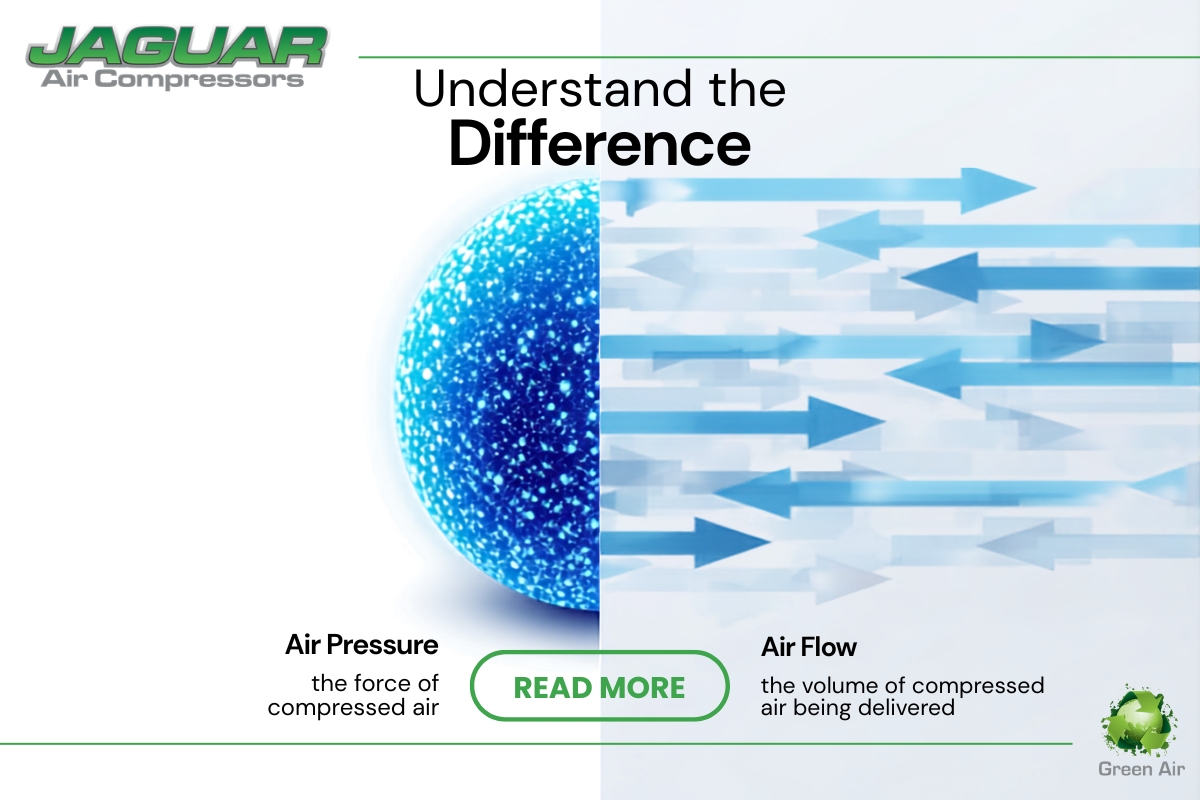
A: Air volume (cfm or l/min) and air pressure determine how large the pipe must be.
The main reason: Preventing pressure drop.
If the pipe is too small:
- The air compressor will work harder
- Tools will lose pressure
- Energy usage will increase
- The system will overheat
Correct pipe sizing ensures:
- Stable air pressure at all points
- Maximum efficiency from the air compressor
- Longer air compressor lifespan
- Correct air delivery to high demand tools (CNC, production facilities, sandblasters, laser cutters, panel shops)
Example:
- A 5.5 kW screw air compressor may use 20–25 mm pipe
- A 22 kW screw air compressor needs 40–50 mm pipe
- A 75 kW screw air compressor may require 63–80 mm pipe or even a ring main system
Q3: Why do different materials suit different applications?
A: Different industries, moisture levels, air purity requirements and budgets influence making the right choice.
1. Galvanised Steel Pipe
Advantages:
- Strong and affordable
- Good for general factory air
- Easy to source and repair
- Handles high pressures
- Handles high temperatures
- Handles harsh industrial environments
Disadvantages:
- Internal corrosion flakes can contaminate air (IF downline equipment, air driers and filtration is not maintained)
- Threading is labour-intensive
- Heavier and harder to install
- Can rust internally when water levels are high (IF downline equipment, air driers and filtration is not maintained)
Good for General Industrial Applications
Galvanised pipe is widely used in:
- Engineering workshops
- Manufacturing plants
- Automotive and panel shops
- Woodworking factories
- Construction workshops
2. Stainless Steel
Advantages:
- Zero corrosion
- Extremely long lifespan
- Clean internal surface equals minimal pressure drop
- Great for humid or corrosive environments
- Suitable for food-grade and medical air
Disadvantages:
- Expensive
- Special welding or compression fittings needed
- Higher installation skill required
Best used for: Food processing, medical facilities, chemical plants and high-purity process air.
3. Copper Tubing
Advantages:
- Smooth interior equals very low-pressure drop
- Corrosion-resistant
- Easy to install with solder or compression fittings
- Lightweight and neat appearance
Disadvantages:
- Expensive
- Theft risk
- Not ideal for large factory systems (diameter limitations)
Best used for: Laboratories, dental, medical, smaller workshops and point-of-use systems.
Q4: Why is the right airline size essential for different air compressor sizes?
A: Because compressed air behaves like a fluid, it needs space to travel without excessive friction.
If the pipe is too small:
- High pressure drops over long distances
- Air compressor cycles more often
- Energy costs increase dramatically
- Tools underperform
- Water buildup increases
- Heat rises in the line
If the pipe is correctly sized:
- Stable pressure at all points
- Maximum airflow delivery
- Lower power consumption
- Less moisture carryover
- Longer compressor and tool life
Rule of thumb: The pipeline must be sized for the airflow output and not the pressure. A 7.5 kW, 15 kW, 30 kW, and 55 kW screw air compressor cannot all use the same size piping because their airflow volumes (l/min or cfm) are completely different.
Q5: Who can help specify the correct pipe size and material?
A: Jaguar Air Compressors specialises in full compressed air system design, including:
-
- Pipe sizing calculations
- Pressure drop analysis
- Ring main design
- Correct material selection (Galvanised / Stainless / Copper / Aluminium)
- Compressor matching
- Filtration and air dryer integration
- Full installation and commissioning
Our team ensures your air system is: Efficient, Safe, Correctly sized, and suitable for your industry