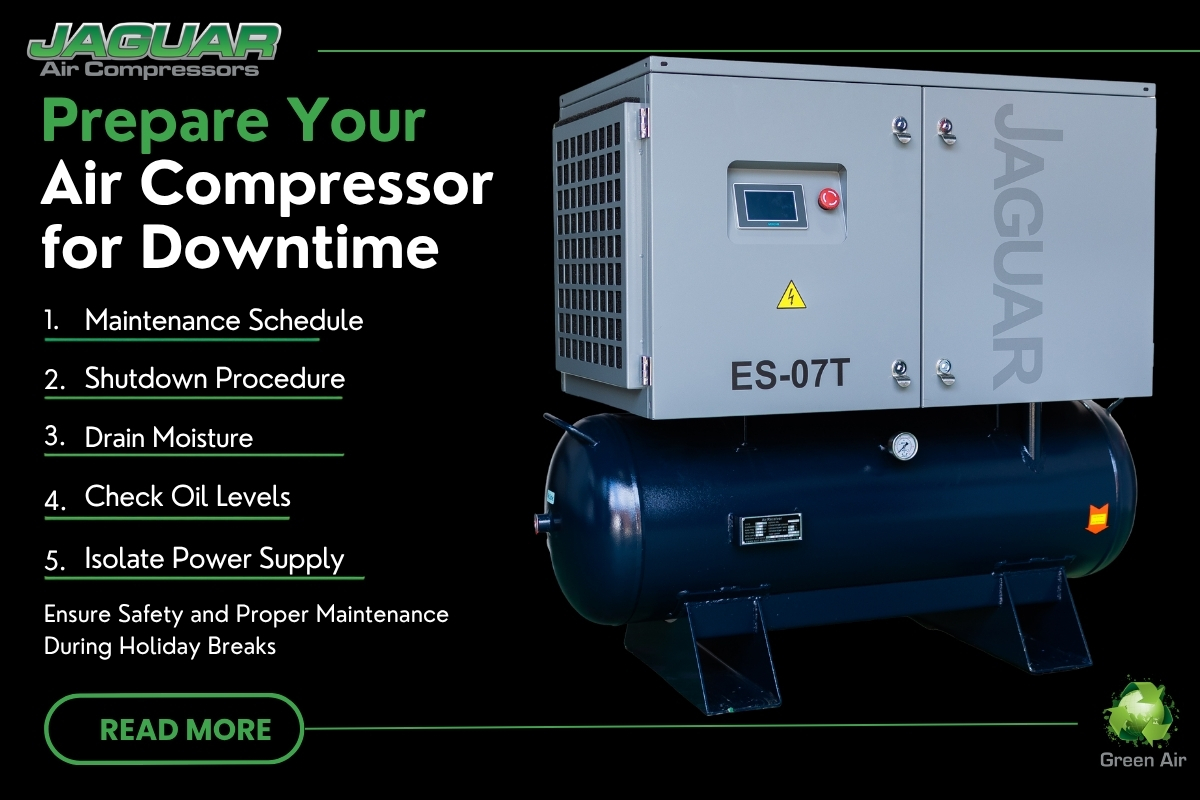

Shutting down production is not the only task to consider when a factory closes for an extended period. Your compressed air system also needs to be properly prepared before the facility is left unattended. Simply switching off an air compressor and leaving it until production resumes can create unnecessary risks. Air leaks, moisture, pressure, power usage, and poor shutdown procedures can all lead to equipment problems, increased costs, and unexpected maintenance when the factory reopens.
Taking time to prepare your air compressor for a factory shutdown helps protect your equipment, reduce unnecessary energy consumption, and ensure your compressed air system is ready when production starts again.
Why Air Compressor Shutdown Preparation Matters
A factory shutdown or holiday break is the ideal time to inspect, maintain, and prepare your compressed air system.
Without the correct shutdown process, your business may experience:
- Compressed air leaks
- Moisture build-up
- Corrosion in the air receiver or pipework
- Unnecessary energy usage
- Faulty drains or filters
- Difficult restart procedures
- Unexpected downtime when production resumes
Preparing your system in advance helps reduce risk and keeps your air compressor ready for reliable operation.
1. Check for Compressed Air Leaks
Inspect the compressed air system for leaks before shutting down your air compressor.
Leaks can occur in pipework, hoses, fittings, connectors, valves, and other components. Although small leaks may seem insignificant during production, they can cause significant compressed air losses over time.
Where possible, carry out a leak inspection before the shutdown. Identifying and repairing leaks can reduce energy waste during normal production and help prevent the compressor from running unnecessarily to maintain pressure while the facility is closed.
2. Shut Down the Air Compressor Correctly
Do not simply switch off the power at the main supply. Instead, follow the manufacturer’s recommended air compressor shutdown procedure.
Depending on the type of air compressor and installation, the shutdown process may require the compressor to complete its normal unloading cycle before being switched off. If your system has multiple air compressors, ensure each unit is shut down correctly. Also consider any automatic sequencing or control systems.
A proper shutdown protects the compressor and prepares it for a smooth, controlled restart when production resumes.
3. Isolate the Compressed Air System
For extended shutdown periods, it may be advisable to isolate the air compressor and compressed air system from the rest of the factory. Closing the correct isolation valves can help prevent compressed air from escaping into production areas while the facility is empty.
However, every installation is different. Always follow your site’s safety requirements and the manufacturer’s recommendations before isolating any compressed air equipment.
4. Drain Moisture from the System
Moisture can accumulate in compressed air systems, especially in air receivers, filters, and other components. Before a factory shutdown, check and drain condensate from the appropriate points in the air system. This helps reduce the risk of corrosion and other moisture-related issues while the equipment is not operating.
Automatic drains should also be checked to ensure they are working correctly. A faulty drain can allow condensate to build up and cause problems when the air system is restarted.
5. Check the Air Receiver Tank
The air receiver tank should not be overlooked before a shutdown, as it is an important part of the compressed air system. Check the air receiver for accumulated condensate and drain it according to the manufacturer’s instructions and site procedures.
Also visually inspect the air receiver and associated pipework for signs of corrosion, damage, or leaks. Identifying these issues before a shutdown allows them to be addressed before they become more serious.
6. Check Filters and Air Treatment Equipment
Inspect the system’s air treatment equipment before closing the factory. This includes:
- Air filters
- Air dryers
- Condensate drains
- Filtration systems
- Other air treatment components
Dirty or blocked filters increase pressure drops, making the air compressor work harder. Problems with a compressed air dryer can also affect air quality and allow excess moisture into the system.
A shutdown period can be a good opportunity to schedule routine maintenance that may be difficult to complete during normal production.
7. Consider the Air Compressor Room Environment
The conditions around the air compressor can affect its performance and condition while the factory is closed. The air compressor room should be clean and free from unnecessary dust, debris, and stored materials. Ventilation openings should also remain clear.
If the facility may be exposed to unusually cold or hot conditions during the shutdown, consider whether additional precautions are needed. Always follow the manufacturer’s recommendations, especially if the air compressor will be out of service for an extended period.
8. Review Your Maintenance Schedule
A factory shutdown provides the perfect opportunity to carry out planned air compressor maintenance.
Depending on operating hours and your maintenance schedule, this may include:
- Checking or replacing air filters
- Inspecting oil levels and oil condition
- Replacing oil and oil filters where required
- Checking belts, hoses, and connections
- Inspecting valves and other components
- Servicing air dryers and filters
- Checking condensate drains
- Inspecting compressed air pipework
Completing maintenance before the factory reopens can help prevent unexpected downtime once production resumes.
9. Reduce Unnecessary Energy Consumption
An extended shutdown is a good opportunity to reduce unnecessary energy usage.
There is no reason for the air compressor to continue operating if the factory is empty and there is no demand for compressed air. Significant energy can be wasted by leaving air compressors running during a holiday break, especially if the system has leaks.
Where appropriate, ensure that the compressed air system is fully shut down and that other equipment using compressed air is also switched off or isolated.
10. Plan the Restart Before the Factory Reopens
Preparing your air compressor for a shutdown is only half of the process. You also need a clear restart plan.
Before bringing the air compressor back into operation, check the system for visible damage, leaks, or signs of moisture. Inspect valves, hoses, connections, and other components.
Once the compressor is running, allow the system to build up to the required operating pressure. Then check that the compressor, dryer, filters, and other equipment are functioning correctly.
Follow the manufacturer’s recommended restart procedure if the system has been shut down for an extended period.
11. Do Not Forget About Safety
Compressed air systems can still contain stored energy, even when switched off. Therefore, shutdown and maintenance procedures should always be carried out by appropriately trained personnel.
Follow your site’s lockout, tagout, or isolation procedures where required. Never perform maintenance on pressurised equipment.
If you are unsure about the correct shutdown or restart procedure for your air compressor, consult the manufacturer’s instructions or contact a qualified compressed air specialist.
Prepare Your Compressed Air System Before You Close the Factory
A factory shutdown or holiday break is a valuable opportunity to give your compressed air system the attention it needs.
Checking for compressed air leaks, draining moisture, carrying out planned maintenance, isolating the system, and correctly shutting down the air compressor can help protect equipment and reduce unnecessary energy consumption.
Most importantly, do not wait until work resumes to discover that your compressed air system has a problem. A little preparation before the shutdown can help ensure your air compressor is ready to support production when the factory reopens.
Contact Jaguar Air Compressors
Need help preparing your air compressor for a factory shutdown?