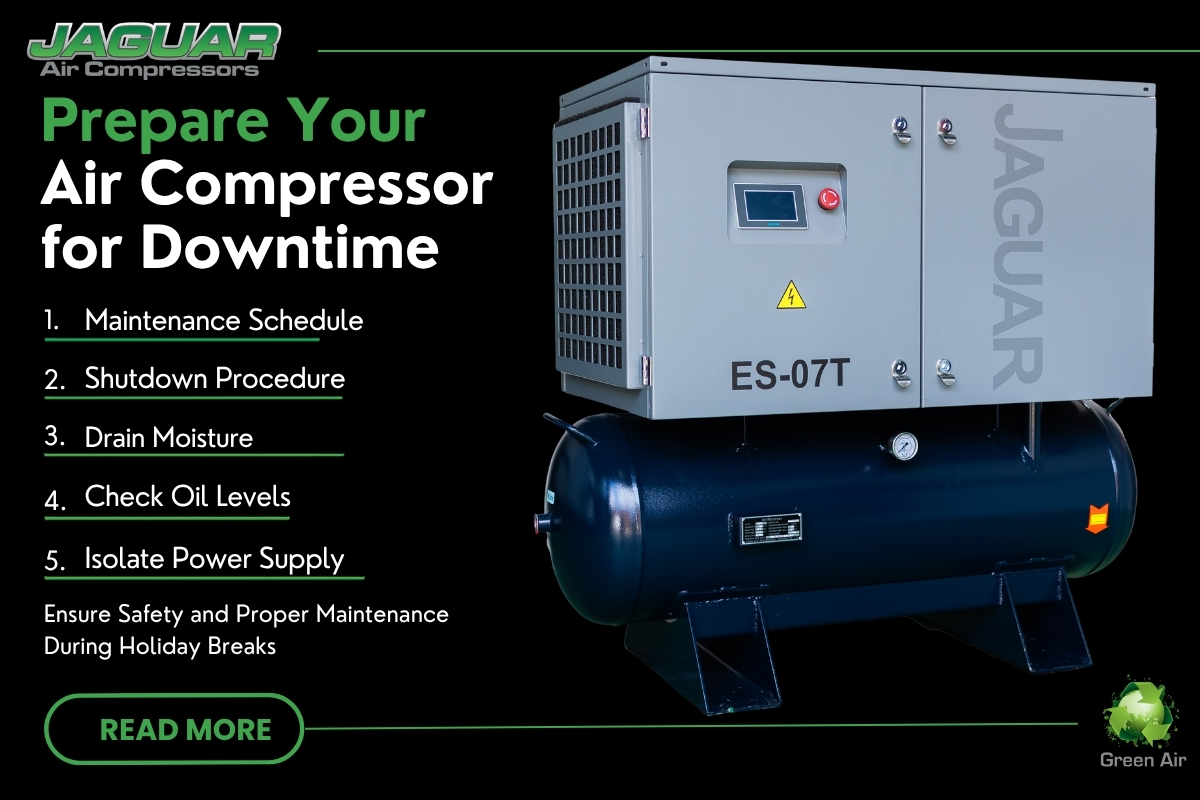

We’re excited to welcome our customers, both new and old, back as we’ve reopened on Monday, 5 January 2026. We hope our customers had a wonderful festive season and are feeling ready for the year ahead.
As the Moyair team gets back into the swing of things, now would be a good time to check up on your air compressor. Below, we provide a checklist for restarting your air compressor after downtimes, such as end-of-year festivities.
The Moyair team is looking forward to a productive and successful start and is excited to share the year ahead with our customers. Let’s make 2026 a great year together!
Checklist for Starting Your Air Compressor After Downtime
When starting up your air compressor after it has been sitting unused for a while, it is important to check the machine’s safety, prevent any damage and slowly ease the air compressor back into being used.
Below is a checklist to follow when starting up your air compressor after a period of downtime:
Before Turning the Air Compressor On
- Visual inspection
o Look for any cracked hoses, loose fittings, rust or oil leaks.
o Check belts/couplings (if applicable) for wear or misalignment.
o Make sure the air intake valve is not blocked. - Check the oil level
o Oil should be at the correct level and look clean.
o If the oil is milky, very dark, or smells burnt, change it. Use OEM-approved oil only, if required.
o Check coolant level is correct (if water-cooled). - Drain the tank
o Open the automatic drain valve at the bottom of the air receiver tank to let out moisture.
o This is important if the air compressor sat for weeks or months (as it prevents rust and water build up). - Check the power supply
o Make sure the cable and plug are undamaged.
o Check main isolator is ON as well as stable power supply.
o Control panel is free of alarms or fault codes.
o Emergency stop tested and reset.
First Startup
- Start with no load
o Disconnect tools and leave the air outlet closed.
o Let the air compressor run and build pressure normally. - Listen and watch
o Listen for knocking, grinding or hissing sounds.
o Watch the pressure gauge to be sure it rises smoothly and shuts off at the normal cut-out pressure. - Check for leaks
o After the air compressor shuts off, listen for any air escaping.
o Air leaks mean wasted air, extra wear and increased power consumption.
Running Checks (First 15–30 Minutes)
- Operating pressure stable
- Operating temperature within limits
- No alarms or warning lights
- No oil carryover at discharge
- No abnormal smells (burning oil or insulation)
After the air compressor is running normally
- Let air compressor cycle once or twice
o This helps circulate oil and confirms the pressure switch works. - Reconnect tools gradually
o Start with light use before running high-demand tools.
Extra Tips
- If your air compressor won’t start, hums or trips a breaker then immediately turn it off and don’t force it.
- If it’s been stored in the cold, let it warm to room temperature first.
- Drain the air receiver tank after each day of use to prevent moisture buildup.