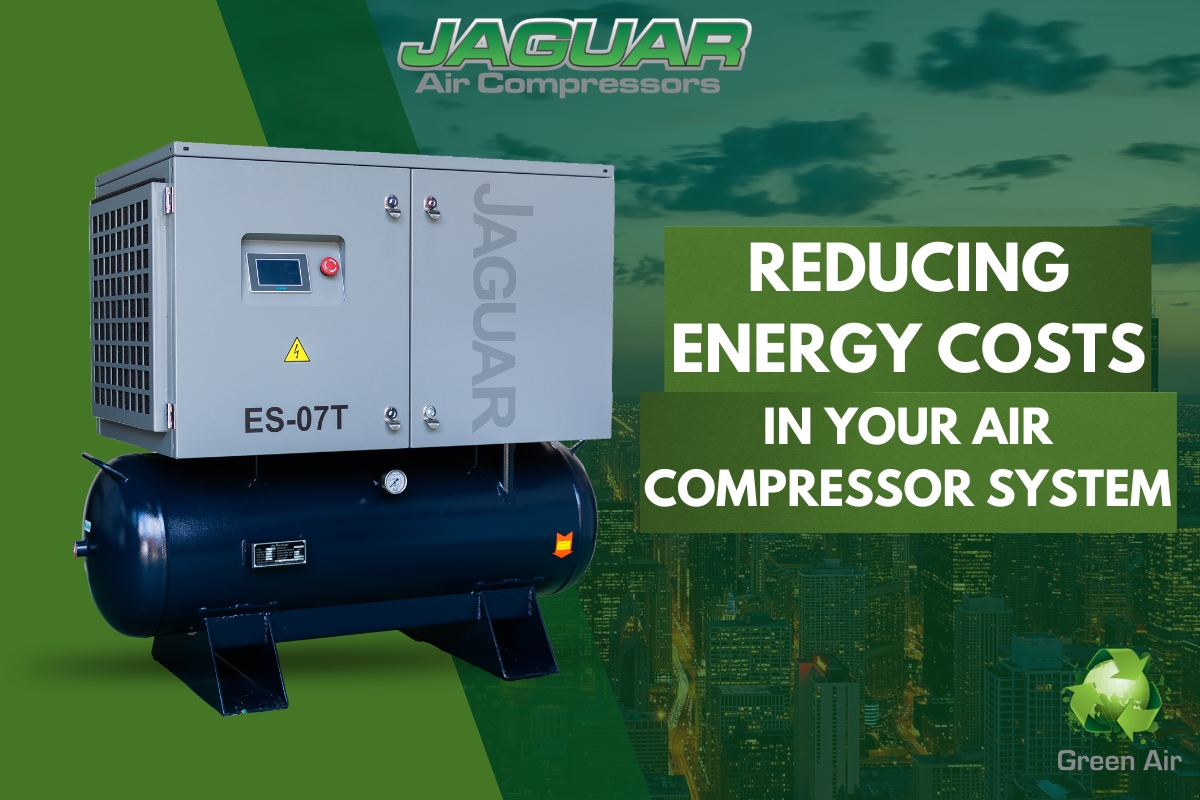

Reduce air compressor energy costs
Compressed air systems are often referred to as the “fourth utility” in industrial operations. However, they are also one of the largest sources of energy consumption in many facilities. Air compressors can account for a significant portion of electricity costs, but with the right strategies, you can reduce air compressor energy costs.
In this guide, we explore practical ways to optimise your air compressor system for maximum energy efficiency and cost savings.
1. Fix Air Leaks to Reduce Energy Waste
Air leaks are one of the most common and costly inefficiencies in any compressed air system. In fact, leaks can account for 20–30% of total air consumption, leading to unnecessary energy usage.
To improve efficiency:
- Inspect pipes, hoses, fittings, and connections regularly
- Use ultrasonic leak detectors or soap solutions to identify leaks
- Implement a routine leak detection and repair program
By addressing leaks early, businesses can achieve immediate energy savings and improved system performance.
2. Lower System Pressure for Better Efficiency
Running your air compressor at higher pressure than required increases energy consumption significantly.
As a guideline:
- Every 1 bar increase can raise energy usage by 7–10%
To optimise pressure:
- Evaluate actual operational requirements
- Reduce system pressure to the lowest effective level
- Install pressure regulators at points of use
Lowering pressure is a simple yet highly effective way to reduce compressor energy costs.
3. Optimise Air Compressor Controls
Outdated control systems often cause air compressors to operate inefficiently, especially in facilities with fluctuating air demand.
Upgrading to modern control systems allows you to:
- Sequence multiple compressors efficiently
- Avoid unnecessary idling
- Prevent partial-load inefficiencies
Smart controls ensure your system runs in the most energy-efficient configuration at all times.
4. Invest in Variable Speed Drive (VSD) Compressors
A Variable Speed Drive (VSD) air compressor adjusts motor speed based on real-time demand, unlike fixed-speed units that operate at full capacity.
Benefits of VSD compressors include:
- Energy savings of 20–50%
- Reduced wear and tear
- Improved system stability
For operations with variable demand, VSD technology is one of the most effective ways to improve energy efficiency.
5. Improve Air Intake Conditions
The quality of intake air directly impacts air compressor performance and energy efficiency.
Best practices include:
- Drawing in cooler, outside air where possible
- Keeping intake filters clean
- Preventing airflow restrictions
Cleaner and cooler air requires less energy to compress, helping to lower operating costs.
6. Maintain Your Air Compressor System Regularly
Routine maintenance is essential for optimal air compressor efficiency. Poor maintenance forces systems to work harder, increasing energy consumption.
A preventive maintenance plan should include:
- Cleaning or replacing filters
- Checking lubrication levels
- Inspecting belts and couplings
- Monitoring overall system performance
Regular servicing not only reduces energy costs but also extends equipment lifespan and reliability.
7. Recover and Reuse Waste Heat
Air compressors generate a large amount of heat during operation. Instead of wasting this energy, businesses can implement heat recovery systems.
Recovered heat can be used for:
- Space heating
- Water heating
- Industrial processes
In some cases, up to 70–90% of energy input can be recovered, significantly improving overall efficiency.
8. Eliminate Inefficient Uses of Compressed Air
Compressed air is often used for tasks that could be done more efficiently with alternative methods.
To reduce demand:
- Replace compressed air cleaning with blowers or vacuum systems
- Avoid using compressed air for cooling
Eliminating unnecessary usage helps reduce system load and energy consumption.
9. Upgrade to Energy-Efficient Equipment
Older air compressors are typically less efficient than modern systems. Upgrading to newer models can result in significant long-term savings.
When evaluating equipment:
- Consider lifecycle costs, not just purchase price
- Look for energy-efficient technologies like VSD
- Choose systems designed for your specific application
Modern equipment can drastically reduce electricity costs and improve productivity.
10. Monitor and Measure Performance
Data-driven insights are key to maintaining an efficient compressed air system.
Install monitoring tools to:
- Track energy consumption
- Identify inefficiencies
- Analyse pressure drops and usage patterns
Continuous monitoring allows for ongoing optimisation and cost reduction.
Conclusion: Improve Efficiency and Reduce Air Compressor Costs
Reducing energy costs in your air compressor system requires a combination of maintenance, optimisation, and smart upgrades. By fixing leaks, lowering pressure, upgrading controls, and investing in efficient technologies, businesses can achieve substantial cost savings and improved performance.
In today’s energy-conscious environment, improving efficiency not only reduces expenses but also supports sustainability and operational reliability.
Start with a system audit, implement quick wins, and build toward long-term improvements—the savings can be significant.
Contact Jaguar Air Compressors
Need expert help to reduce your air compressor energy costs?
Contact:
📞 Western Cape: 083 676 7909
📞 Johannesburg: 011 704 2630