
Compressed air is one of the most adaptable and essential utilities in modern industry. It powers everything from manufacturing equipment and packaging lines to automated manufacturing systems. However, compressed air is also one of the most energy-demanding utilities. Many businesses do not realise that most of the electrical energy used to generate compressed air is converted into heat.
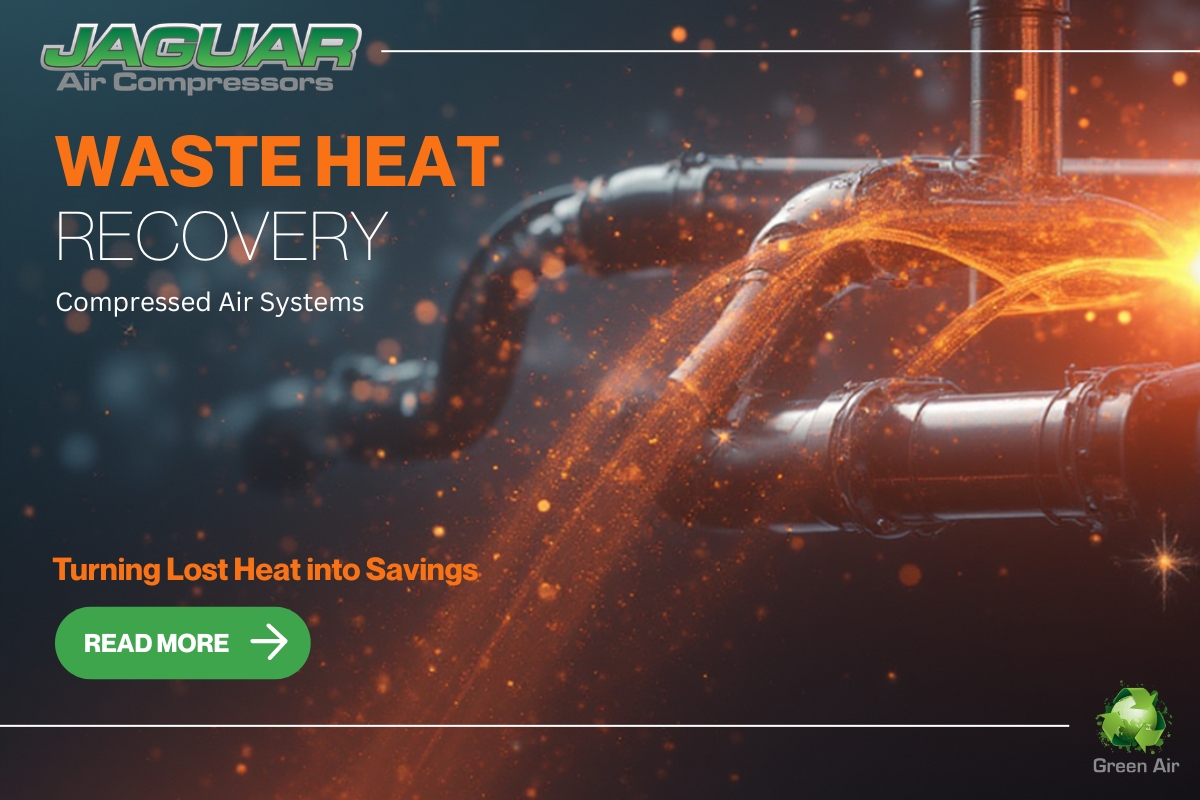
Instead of allowing this heat to escape into the atmosphere, compressed air waste heat recovery systems allow businesses to capture and reuse it. This can reduce energy costs, improve overall efficiency, and support sustainability goals. As energy prices continue to rise, waste heat recovery is becoming an attractive investment for companies that want to maximise the value of their compressed air systems.
Where Does Compressed Air Waste Heat Come From?
During the compression process, air is compressed into a smaller volume. This causes its temperature to rise significantly. This heat is a natural by-product of compression and is continuously generated whenever the air compressor is running.
Around 90% to 94% of the electrical energy consumed by an air compressor is converted into heat. Without a waste heat recovery system, this heat is removed through cooling systems and released into the surrounding environment.
Instead of allowing this energy to go to waste, it can be recovered and redirected for practical use within the facility.
What Is Waste Heat Recovery?
Waste heat recovery is the process of capturing thermal energy generated by an air compressor and using it elsewhere in the business. Modern rotary screw air compressors can be fitted with heat recovery systems that capture hot air or hot oil before it is discharged. This recovered energy can then be transferred to other heating applications, reducing the need for additional energy sources.
In simple terms, businesses can stop paying to generate heat and then paying again to remove it from the compressor room. Instead, they can put that heat to work.
Common Uses for Recovered Heat
Recovered heat can be used in a wide range of practical industrial and commercial applications.
Space Heating
During colder months, one of the most common uses for recovered heat is space heating.
Warm air recovered from an air compressor can help heat:
- Warehouses
- Workshops
- Production facilities
- Office spaces
This reduces the need for conventional heating systems and can lower energy costs.
Process Heating
Many industrial processes require heated water, air, or process fluids.
Recovered heat can support:
- Cleaning processes
- Drying operations
- Chemical manufacturing
- Food processing
- Textile production
This reduces the energy required from boilers, electric heaters, or other heating systems.
Water Heating
Recovered heat can also be used to preheat water for:
- Staff facilities
- Wash bays
- Production processes
- Boiler feedwater
- Cleaning equipment
Because the water is already partially heated, less energy is required to reach the desired temperature.
Financial Benefits of Compressed Air Waste Heat Recovery
For many facilities, electricity is one of the largest operating expenses linked to compressed air systems.
Recovering waste heat can provide several financial benefits, including:
- Lower electricity consumption
- Reduced heating fuel costs
- Faster return on investment
- Improved air compressor efficiency
- Lower year-round operating costs
Depending on compressor size, operating hours, and energy consumption, businesses can often recover their investment quickly through lower energy costs.
Facilities that run air compressors for long daily shifts usually see the biggest financial benefit.
Environmental Benefits of Heat Recovery
Heat recovery is not only good for operating costs. It also supports environmental sustainability.
By reusing energy that would otherwise be wasted, businesses can:
- Reduce overall energy consumption
- Lower greenhouse gas emissions
- Improve energy efficiency ratings
- Support environmental compliance initiatives
- Reduce their carbon footprint
For companies working toward sustainability goals, waste heat recovery can play an important role in a broader energy management strategy.
Which Air Compressors Are Suitable for Heat Recovery?
Rotary screw air compressors are especially suitable for waste heat recovery because they often run continuously and generate a consistent supply of recoverable heat.
The amount of recoverable energy depends on several factors, including:
- Air compressor size
- Power rating
- Operating hours
- Compressor loading
- Existing cooling system
- Facility heating requirements
Larger air compressors that run continuously throughout the day generally provide the highest potential savings.
Is Waste Heat Recovery Right for Your Business?
Not every facility has the same heating requirements. However, many businesses have applications that could benefit from recovered heat without realising it.
Your facility may be a good candidate for waste heat recovery if it:
- Operates air compressors for several hours daily
- Requires hot water regularly
- Uses space heating during winter
- Has industrial drying or cleaning processes
- Wants to reduce energy costs
- Is focused on improving sustainability
A professional compressed air system assessment can identify opportunities to recover and reuse waste heat effectively.
Maximise Your Compressed Air Investment
Energy efficiency does not stop at choosing the right air compressor. Optimising every part of your compressed air system can greatly reduce lifetime operating costs.
Alongside regular maintenance, leak detection, correct system sizing, and efficient controls such as Variable Speed Drive (VSD) technology, waste heat recovery helps businesses get more value from every kilowatt consumed.
Instead of allowing valuable heat to disappear through cooling systems, it becomes another useful resource that supports lower operating costs and improved productivity.
Conclusion
Compressed air systems generate a substantial amount of heat during operation, but that energy does not have to go to waste.
By capturing and reusing waste heat, businesses can reduce energy bills, improve operational efficiency, and lower their environmental impact.
Whether recovered heat is used for space heating, hot water, or industrial processes, compressed air waste heat recovery transforms a by-product into a valuable asset.
For businesses looking to improve efficiency and reduce operating costs, it is one of the smartest ways to maximise the return on their compressed air investment.
Contact Jaguar Air Compressors
Need help with compressed air waste heat recovery or improving your compressed air system efficiency?