Why Air Dryers and In-Line Filtration Are Critical for Your Compressed Air System

Compressed air, often referred to as the “fourth utility,” may appear clean and harmless. However, untreated compressed air can contain moisture, oil, dirt, and other contaminants that negatively impact equipment performance, product quality, and operational efficiency. Installing dryers and in-line filtration system is not optional—it is essential for maintaining a reliable, efficient, and long-lasting compressed air system.
The Problem: Contaminated Compressed Air
When air is compressed, everything in the surrounding environment becomes concentrated, including:
- Moisture (water vapour)
- Oil from air compressors
- Dust and airborne particles
- Micro-organisms and contaminants
As compressed air cools, moisture condenses into liquid water. This water, together with oil and debris, travels through air lines and into equipment, creating serious operational problems.
Without proper compressed air treatment, contamination can reduce efficiency, increase maintenance costs, and damage valuable equipment.
Why Moisture in a Compressed Air System Is a Serious Issue
1. Corrosion and Rust
Moisture inside a compressed air system causes internal rust and corrosion in:
- Pipes
- Air tanks
- Pneumatic tools
- Valves and fittings
Over time, corrosion weakens infrastructure, leading to leaks, pressure drops, and potential system failure.
2. Equipment Damage
Pneumatic equipment is not designed to handle water contamination. Excess moisture can:
- Wash away lubrication
- Cause internal wear and tear
- Damage valves and cylinders
- Lead to premature equipment failure
This results in higher maintenance costs and unnecessary downtime.
3. Product Quality Problems
In industries such as manufacturing, automotive, painting, and food processing, poor compressed air quality can directly affect products.
Moisture contamination may cause:
- Paint bubbling and fisheyes
- Contamination of sensitive products
- Inconsistent finishing quality
- Production defects
Maintaining clean, dry compressed air is essential for ensuring consistent product quality and compliance standards.
4. Freezing in Cold Conditions
In colder environments, moisture can freeze inside compressed air lines, causing:
- Restricted airflow
- Blocked pipes
- Damaged system components
This can interrupt operations and lead to expensive repairs.
The Role of an Air Dryer in a Compressed Air System
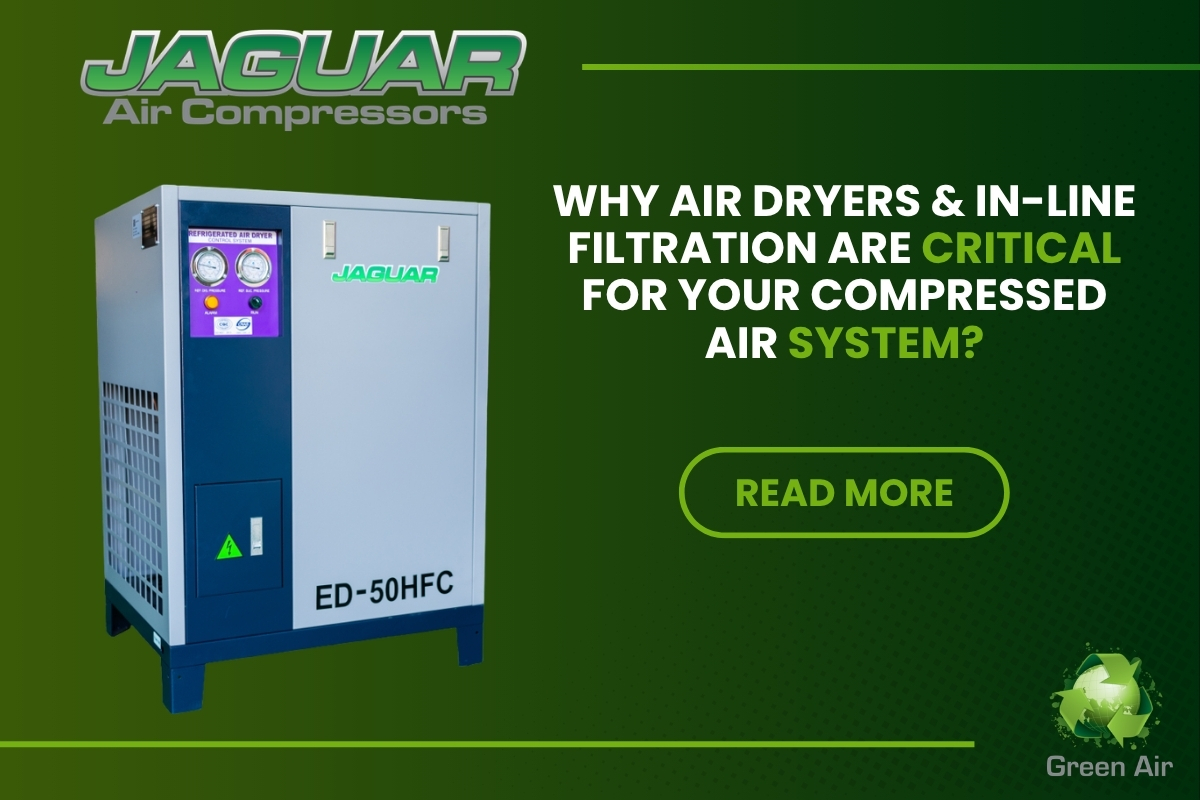
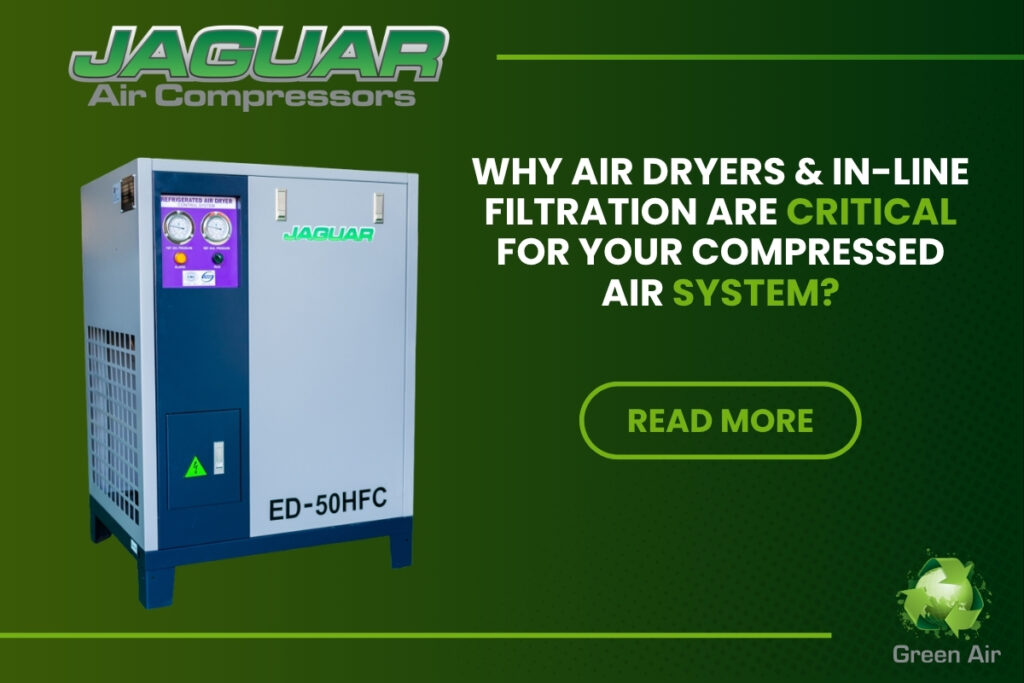
An air dryer removes moisture from compressed air before it reaches equipment and production lines. Proper air drying helps maintain system efficiency, reliability, and air quality.
Types of Air Dryers
1. Refrigerated Air Dryers
Refrigerated air dryers are commonly used in general industrial applications where moderate moisture removal is required.
2. Desiccant Air Dryers
Desiccant air dryers are used in applications requiring extremely dry air, such as food processing, pharmaceuticals, and sensitive manufacturing environments.
Key Benefits of Air Dryers
Installing the correct air dryer provides several important advantages:
- Prevents condensation in air lines
- Protects equipment from rust and corrosion
- Improves compressed air quality
- Reduces maintenance and repair costs
- Extends equipment lifespan
- Improves overall system efficiency
Why In-Line Filtration Is Essential
While air dryers remove moisture, in-line filtration systems remove contaminants such as oil, dirt, and particles from compressed air.
Without proper filtration, contaminants can damage equipment and reduce operational performance.
Types of In-Line Filters
1. Particulate Filters
Remove dust, dirt, and solid particles from compressed air.
2. Coalescing Filters
Remove oil aerosols and fine contaminants from the system.
3. Activated Carbon Filters
Eliminate odours, vapours, and oil residue from compressed air.
The Importance of a Complete Air Treatment System
An efficient compressed air system should always include:
- Air dryers to remove moisture
- In-line filters to remove particles and oil contaminants
Together, these systems create clean, dry, and reliable compressed air, improving productivity and protecting equipment.
Cost Savings and Improved Energy Efficiency
Investing in proper compressed air treatment offers significant long-term benefits, including:
- Reduced downtime
- Lower repair and replacement costs
- Improved energy efficiency
- Longer equipment lifespan
- Increased system reliability
Although some businesses delay installing air treatment equipment to reduce upfront costs, poor air quality almost always leads to higher operational expenses over time.
Health and Safety Benefits of Clean Compressed Air
Contaminated compressed air can also create health and safety risks, particularly in environments where compressed air comes into contact with products or is used for cleaning applications.
Proper air treatment systems help businesses:
- Maintain safer working environments
- Improve operational safety
- Meet industry air quality standards
- Protect staff and products from contamination
Conclusion
Air dryers and in-line filtration systems are not luxury add-ons—they are critical components of every compressed air system. Without proper compressed air treatment, moisture and contaminants can damage equipment, reduce efficiency, increase downtime, and compromise product quality.
By investing in the correct air dryer and filtration system, businesses can improve reliability, reduce costs, and protect long-term operational performance.
Recommended Compressed Air Treatment Solutions
Every compressed air system should include:
- A correctly sized air dryer
- A multi-stage in-line filtration system
- Routine maintenance and monitoring
Clean compressed air is reliable compressed air—and reliable compressed air keeps your operation running efficiently.
Contact Jaguar Air Compressors
Need help installing an air dryer or in-line filtration system for your compressed air setup?
📞 Western Cape: 083 676 7909
📞 Johannesburg: 011 704 2630