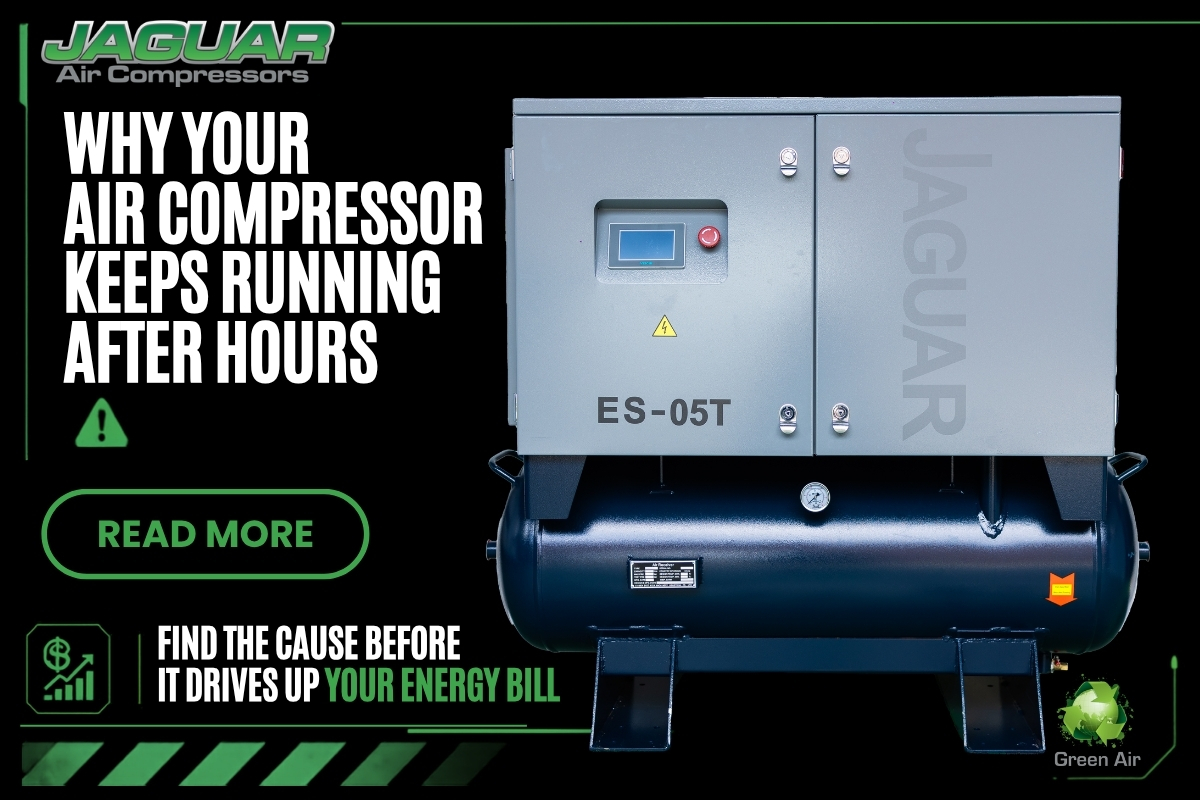

Is Your Air Compressor Still Running When Everyone Has Gone Home?
If your air compressor keeps running after hours, it is costing your business money. Many facilities assume this is normal, but in most cases, an air compressor should have little to no demand once production has ended.
An air compressor that continues to cycle or run overnight is often a sign that compressed air is being used somewhere in the system. The longer this issue goes unnoticed, the more electricity is wasted and the harder the compressor must work.
Understanding why your air compressor runs after hours is the first step toward reducing energy costs, improving system efficiency, and protecting your compressed air equipment.
Why Does an Air Compressor Run After Hours?
Compressed air systems are designed to maintain the required operating pressure. When pressure falls below the set level, the air compressor starts or loads to bring pressure back up.
If production has ended but the air compressor is still running, something is causing pressure to drop. This could be due to air leaks, equipment left running, faulty controls, or hidden issues within the compressed air installation.
In most cases, the compressor is replacing compressed air that has escaped from the system.
The Most Common Reason: Compressed Air Leaks
Compressed air leaks are one of the most common reasons an air compressor keeps running after hours.
Even small air leaks can have a major impact over time. Worn seals, loose pipe fittings, damaged hoses, leaking quick couplings, faulty drain valves, and deteriorated connections can all allow compressed air to escape continuously.
These leaks often go unnoticed during production because they may represent only a small percentage of total air demand. However, once production stops, air leaks may become the only source of air consumption. As a result, the air compressor continues running throughout the night.
A facility with several small compressed air leaks can waste thousands of kilowatt-hours of electricity every year.
Equipment Left Running After Production
Air leaks are not the only cause of compressed air consumption after hours.
When production has finished, some equipment may continue using compressed air.
Examples include:
- Pneumatic actuators left energised
- Automated machinery in standby mode
- Air-operated pumps
- Packaging equipment
- Dust extraction or blow-off systems
- Air-operated valves that remain pressurised
If these systems remain active overnight, they continue to consume compressed air and cause the air compressor to cycle unnecessarily.
Incorrect Air Compressor Controls
In some cases, the air compressor may continue running even when there is little or no demand for compressed air.
Incorrect pressure settings, poorly configured load/unload controls, and outdated control strategies can cause air compressors to run unnecessarily during low-demand periods.
Facilities with multiple air compressors may also experience control problems if the machines are not properly sequenced. Instead of one compressor handling small overnight demand, several compressors may continue operating unnecessarily.
Modern air compressor controllers can help reduce unnecessary running hours by adjusting compressor operation to match actual air demand.
Hidden Pressure Losses in the System
Unnecessary air compressor operation can also be caused by hidden pressure losses elsewhere in the compressed air system.
Common causes include:
- Blocked air filters
- Undersized pipework
- Partially closed valves
- Pressure drops across air treatment equipment
These issues may go unnoticed during production. However, they can cause the system to operate inefficiently around the clock.
How Much Could After-Hours Operation Be Costing You?
Electricity is the largest operating cost of most compressed air systems.
Even a small air compressor running unnecessarily for several hours every night can use a significant amount of electricity over the course of a year.
In many facilities, the cost of wasted electricity is far greater than the cost of fixing air leaks or improving system performance.
Reducing unnecessary air compressor operation can help:
- Lower electricity costs
- Reduce maintenance requirements
- Extend component service life
- Improve compressed air system efficiency
- Reduce energy waste
How to Find the Problem
If your air compressor keeps running after hours, do not assume it is normal. Start by investigating the cause.
Useful steps include:
- Listen for obvious compressed air leaks
- Check whether production equipment has been left operating
- Review air compressor run-time logs
- Monitor system pressure overnight
- Inspect drain valves and pipework for leaks
- Confirm that air compressor controls are configured correctly
- Arrange a professional compressed air leak detection survey
Many businesses are unaware of how much compressed air is wasted when their facility is supposedly shut down.
Preventing Unnecessary Air Compressor Operation
Regular system maintenance and performance monitoring are essential for reducing unnecessary air compressor operation after hours.
A strong prevention plan should include:
- Regular compressed air leak detection
- Preventative maintenance
- Periodic compressed air audits
- Flow meters
- Pressure monitoring equipment
- Intelligent air compressor controls
These tools and maintenance practices provide valuable information about when and where compressed air is being used.
Understanding how your system operates after hours can help identify ways to improve efficiency and reduce operating costs.
Conclusion
If your air compressor keeps running after hours, it is often a sign of an underlying problem. Air leaks, equipment left running, incorrect control settings, and pressure losses can all cause the compressor to use electricity unnecessarily after production has stopped.
Fixing these problems can help lower energy costs, reduce maintenance expenses, and improve the reliability of your compressed air system.
If your air compressor is still running after your facility has closed, it is worth investigating. Every unnecessary hour of operation adds to your costs.
Contact Jaguar Air Compressors
Need help finding out why your air compressor keeps running after hours?