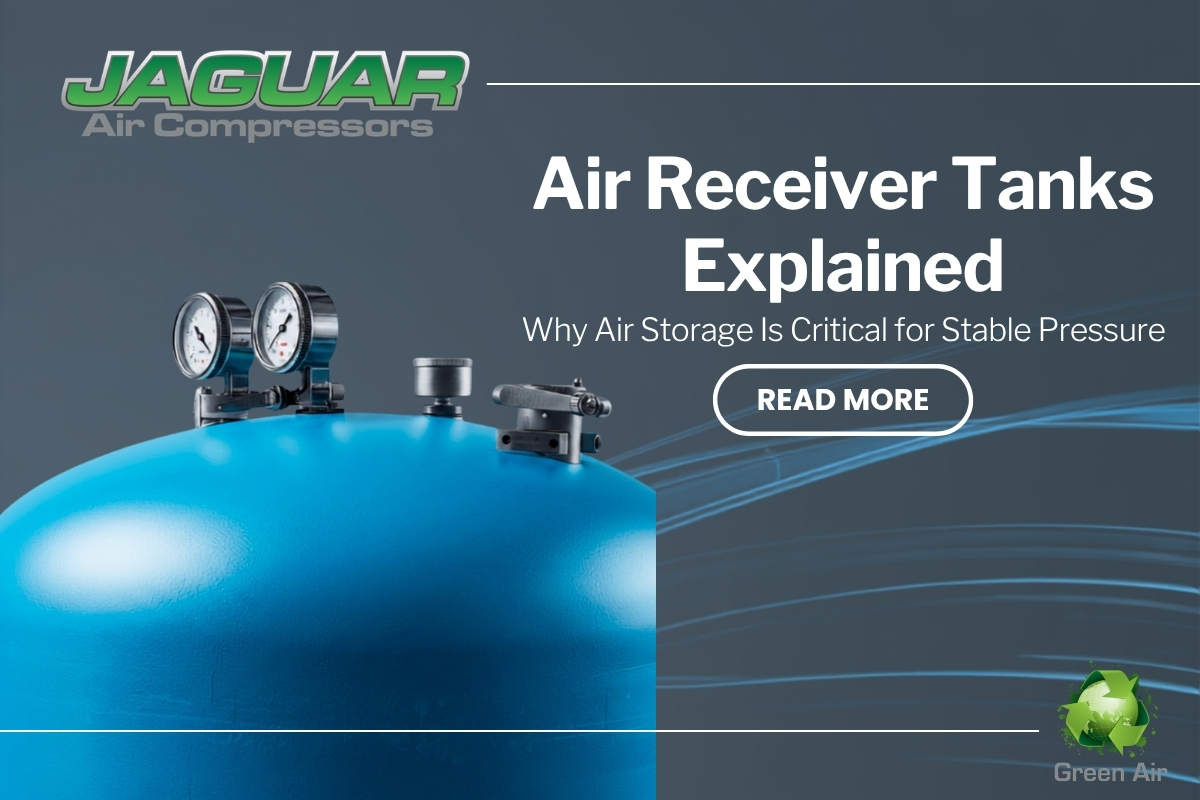

An air receiver tank serves as a storage vessel for compressed air, helping to stabilise pressure, improve efficiency and protect a compressed air system from unnecessary strain. Even a well-sized air compressor can struggle to maintain stable pressure during fluctuating demand without proper air storage.
What Is an Air Receiver Tank?
An air receiver tank is a pressure vessel that stores compressed air after it leaves the air compressor. It serves as a buffer between the air compressor and the compressed air demand from the facility.
Instead of the air compressor having to react instantly to every change in air consumption, the air receiver tank provides a reserve of compressed air that can be used whenever demand temporarily exceeds the compressor’s output.
Put simply, the air receiver tank acts like a battery for your compressed air system, storing energy for when it is needed most.
Why Stable Pressure Matters
Many industrial processes require consistent compressed air pressure to operate efficiently.
Pressure fluctuations can cause:
- Reduced production efficiency
- Inconsistent product quality
- Poor pneumatic tool performance
- Equipment malfunctions
- Increased energy consumption
- Premature wear on system components
Maintaining stable system pressure ensures reliable operation throughout the facility while reducing unnecessary strain on the air compressor.
How Air Receiver Tanks Help Maintain Stable Pressure
1. Absorbing Demand Spikes
Compressed air demand is rarely constant. Production equipment may stop and start throughout the day, pneumatic tools may be used simultaneously, or sudden bursts of air may be required for certain processes.
These demand spikes can cause significant pressure drops without an air receiver tank. An air receiver that is properly sized stores enough compressed air to supply these short-term increases in demand while the air compressor adjusts to changing conditions.
This helps to maintain stable pressure throughout the air system and prevent any interruptions to production.
2. Reducing Air Compressor Cycling
In air systems without proper air storage, the air compressor may load and unload repeatedly as pressure rises and falls.
Frequent cycling can lead to:
- Increased motor wear
- Higher maintenance requirements
- Reduced air compressor lifespan
- Greater energy consumption
An air receiver tank serves as a buffer that reduces rapid pressure fluctuations, allowing the air compressor to operate more efficiently and reducing unnecessary load and unload cycles.
Improving Energy Efficiency
Insufficient air storage can increase energy costs. Increasing an air compressor’s pressure setting is often done to compensate for excessive pressure fluctuations. This may solve pressure problems temporarily however, it usually results in higher energy consumption.
A properly sized air receiver tank can:
- Minimise pressure drops
- Reduce pressure fluctuations
- Allow lower system operating pressures
- Improve overall air compressor efficiency
The result is lower electricity consumption and reduced operating costs.
Supporting Variable Air Demand
Not many facilities operate with constant air consumption.
Common causes of changing demand include:
- Shift changes
- Intermittent pneumatic tools
- Packaging equipment cycles
- Production line starts and stops
- Batch manufacturing processes
An air receiver tank smooths out fluctuations in compressed air demand by storing excess compressed air during low demand periods and supplying additional air during peak demand periods.
A more balanced and stable compressed air system is then created.
Moisture Removal Benefits
Air receiver tanks also contribute to improved compressed air quality. Compressed air slows down and cools as it enters the air receiver tank. This cooling effect causes moisture to condense and collect at the bottom of the air receiver tank, where it can be removed through a drain system.
Benefits include:
- Reduced moisture entering downstream equipment
- Improved performance of air dryers
- Better protection for pneumatic tools
- Reduced corrosion in piping systems
While not a substitute for proper air treatment equipment, air receiver tanks play an important role in moisture management.
How Do You Know If Your Air Receiver Tank Is Too Small?
Signs of insufficient air storage include:
- Frequent pressure fluctuations
- Rapid air compressor cycling
- Air compressor running continuously during peak demand
- Operators reporting pressure drops
- Production equipment performing inconsistently
- Excessive pressure settings being used to compensate for demand changes
If any of the above issues sound familiar, your compressed air system may benefit from additional air storage capacity.
Choosing the Right Air Receiver Tank Size
Not one single air receiver tank size is suitable for every application.
Proper sizing depends on factors such as:
- Air compressor capacity
- System pressure
- Air consumption patterns
- Peak demand requirements
- Load and unload settings
- Production processes
An undersized air receiver tank may not provide enough storage to stabilise pressure, while an oversized air receiver tank can increase installation costs unnecessarily.
A professional compressed air system assessment can determine the most suitable air receiver tank capacity for your facility.
The Bottom Line
An air receiver tank is not only a storage vessel. It plays a critical role in maintaining stable pressure, reducing air compressor wear, improving energy efficiency and supporting reliable production.
When air demand changes unexpectedly, the air receiver tank provides a reserve of compressed air which helps create a smoother, more efficient compressed air system.
Whether looking to improve an existing compressed air system or install a new air compressor, making sure there is adequate air storage should be an important part of your planning procedure. The right air receiver tank can improve performance significantly, reduce operating costs and help maximise the return on your compressed air investment.
Need help? Contact Jaguar Air Compressors